

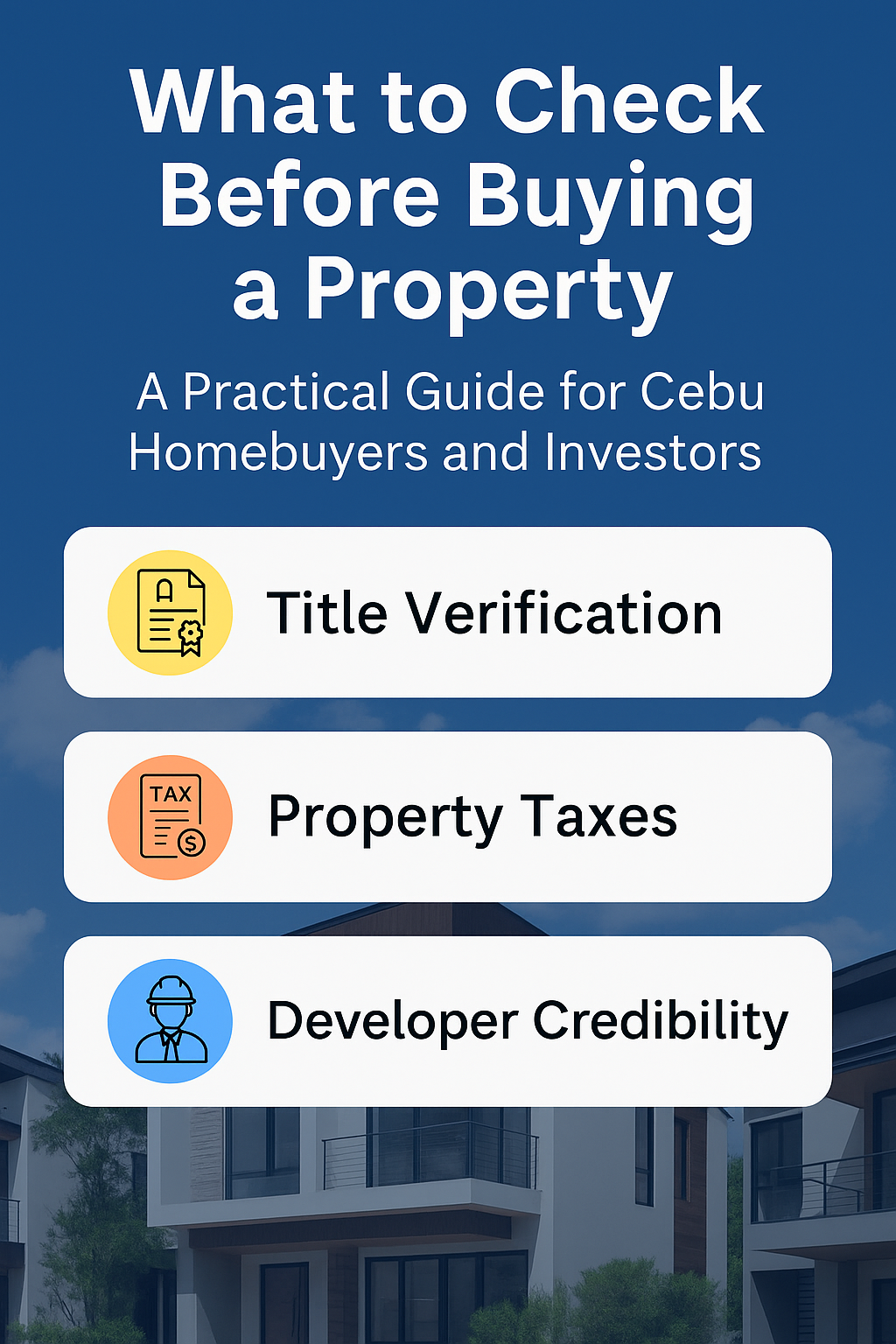
🏡 What to Check Before Buying a Property: A Practical Guide for Cebu Homebuyers and Investors
By Junie Alon, CPA, REB
Buying a property is one of the biggest financial decisions anyone can make. Whether you’re a first-time buyer, an OFW investing for your family, or an investor expanding your portfolio, it’s important to ensure that the property you’re buying is safe, legitimate, and worth your hard-earned money.
In the Philippines—especially in fast-growing areas like Cebu—buyers must take extra care in reviewing documents and verifying project credentials. This guide summarizes the three most important things to check before purchasing a property: title, taxes, and developer credibility.
🧾 1. Verify the Property Title
The title is the most critical document in any real estate transaction. It legally establishes ownership, boundaries, and the property’s status.
✔ What to Check in the Title
-
Is the title authentic?
Verify it at the Registry of Deeds (ROD) where the property is located. -
Does it contain the correct details?
Check the lot number, area, and registered owner. -
Are there encumbrances?
Look for annotations indicating:-
Mortgage
-
Adverse claims
-
Court cases
-
Liens
Issues like these may delay or block the transfer of ownership.
-
✔ Types of Titles
-
TCT (Transfer Certificate of Title): For residential lots and houses
-
CCT (Condominium Certificate of Title): For condominium units
Always request a Certified True Copy (CTC) directly from ROD for accuracy.
🧾 2. Check if Taxes Are Updated
Unpaid real property taxes can be transferred to the buyer after the sale, so it’s essential to check them early.
✔ What Documents to Request
-
Latest Real Property Tax (RPT) receipt
-
Updated Tax Declaration (Tax Dec)
-
Clearances from the local government unit (LGU)
-
If applicable: BIR CAR (Certificate Authorizing Registration) for secondary transfers
Buying a property with unpaid taxes is risky—banks may refuse loan approval, and LGUs may impose penalties or interest.
🧾 3. Confirm Developer Credibility
If you’re buying pre-selling, subdivision properties, or condo units, make sure the developer has a strong track record.
✔ What to Verify
-
DHSUD License to Sell (LTS)
This ensures the developer is legally allowed to offer the project. -
Project Registration & Permits
Check for building permits, development permits, and compliance certifications. -
Developer Reputation
Research:-
Previous projects
-
Quality of turnover
-
Timeliness of completion
-
Feedback from current homeowners
-
Trusted developers follow strict timelines, comply with government regulations, and deliver the promised quality.
🛡️ Why These Checks Matter
A property might look good on paper or during site viewing, but without proper verification:
-
Ownership may be unclear
-
The buyer may inherit unpaid taxes
-
The project may be delayed or unsafe
-
Banks may decline financing
-
Legal disputes may arise
Doing due diligence early ensures peace of mind, protects your finances, and secures your investment.
🧠 Final Thoughts
Real estate is a rewarding investment—but only if backed by proper documentation, verification, and guidance. Taking time to check the title, taxes, and developer can save you from costly mistakes and ensure that your investment is safe and sound.
If you’re unsure how to begin, a licensed real estate broker can guide you through every step of the process—professionally and transparently.
For Professional Assistance
For title checking, due diligence, property sourcing, and investment guidance, contact:
📩 Junie Alon, CPA, REB
📞 0917 114 6166 (Viber/WhatsApp available)
🏢 REB PRC No. 0035478 – Valid Until June 2028
🏢 DHSUD: R7-B-8447
